

Online trading has revolutionized the way individuals engage with financial markets, allowing them to buy and sell assets from the comfort of their homes. At its core, online trading involves the exchange of financial instruments such as stocks, bonds, commodities, and currencies through digital platforms. This accessibility has democratized trading, enabling anyone with an internet connection to participate in the global economy.
The fundamental principle behind online trading is the concept of supply and demand; prices fluctuate based on how much buyers are willing to pay versus how much sellers are willing to accept. To effectively navigate the world of online trading, one must grasp several key concepts. First, understanding different types of orders is crucial.

Market orders execute trades at the current market price, while limit orders allow traders to specify a price at which they are willing to buy or sell an asset. Additionally, traders should familiarize themselves with various asset classes and their characteristics. For instance, stocks represent ownership in a company and can yield dividends, while forex trading involves currency pairs and is influenced by macroeconomic factors.
Knowledge of these basics lays the groundwork for more advanced trading strategies and techniques.
Key Takeaways
- Grasp fundamental concepts to build a strong foundation in online trading.
- Select a reliable and user-friendly trading platform tailored to your needs.
- Use market trend analysis and pattern recognition to inform trading decisions.
- Develop risk management techniques and strategic plans to protect investments.
- Combine technical and fundamental analysis for comprehensive market insights.

Choosing the Right Online Trading Platform
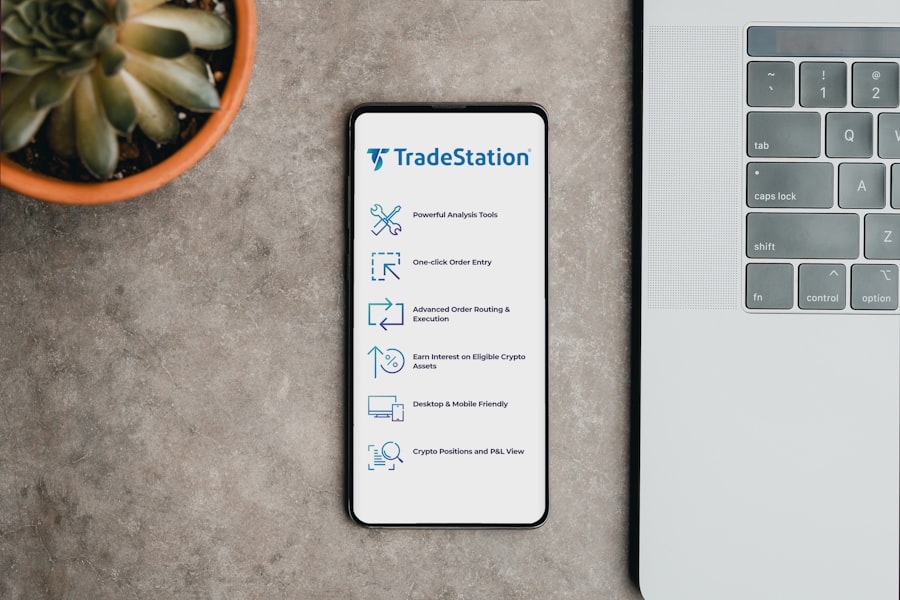
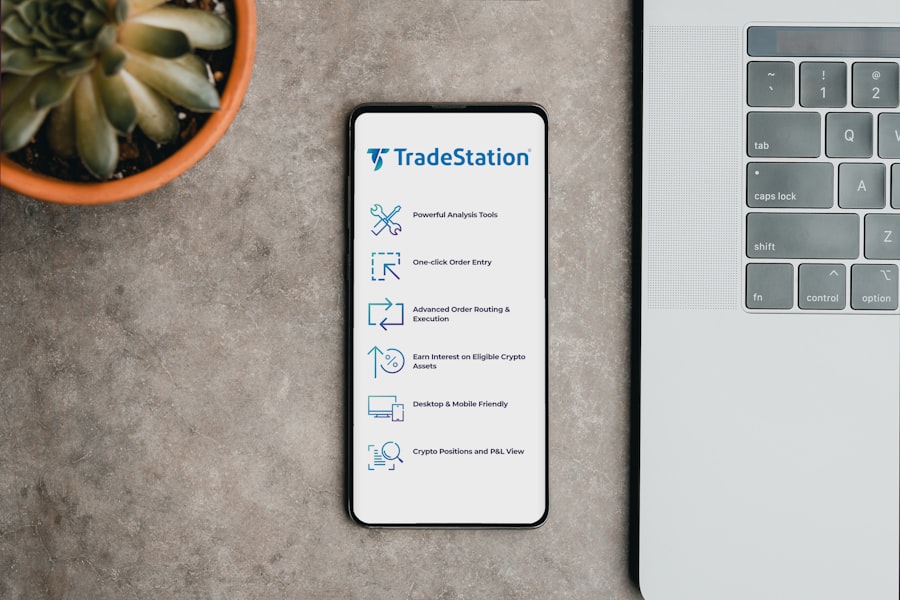
Selecting an appropriate online trading platform is a critical step for any trader, as it can significantly impact their trading experience and success. A good platform should offer a user-friendly interface, robust security features, and a wide range of financial instruments. Traders should consider factors such as transaction fees, margin requirements, and the availability of research tools when evaluating different platforms.
For example, some platforms may charge commissions on trades, while others might offer commission-free trading but make money through spreads. Moreover, the choice of platform can also depend on the trader’s level of experience. Beginners may benefit from platforms that provide educational resources and demo accounts to practice trading without financial risk.
In contrast, more experienced traders might prioritize advanced charting tools and algorithmic trading capabilities. Additionally, mobile compatibility is increasingly important in today’s fast-paced environment, allowing traders to monitor their positions and execute trades on-the-go. Ultimately, the right platform should align with the trader’s goals, preferences, and trading style.
Analyzing Market Trends and Patterns
Market analysis is a cornerstone of successful online trading, as it enables traders to make informed decisions based on historical data and current market conditions. Two primary forms of analysis are technical analysis and fundamental analysis. Technical analysis focuses on price movements and patterns using charts and indicators to predict future price behavior.
Traders often look for trends—upward (bullish), downward (bearish), or sideways—and utilize various tools such as moving averages, Relative Strength Index (RSI), and Fibonacci retracement levels to identify potential entry and exit points. On the other hand, fundamental analysis examines economic indicators, company performance, and geopolitical events that can influence asset prices. For instance, a trader analyzing a stock might look at earnings reports, revenue growth, and industry trends to gauge its potential for appreciation.
Economic indicators such as GDP growth rates, unemployment figures, and inflation can also provide insights into currency movements in forex trading. By combining both technical and fundamental analysis, traders can develop a comprehensive understanding of market dynamics and enhance their decision-making process.
Risk Management and Strategy Development
| Metric | Description | Typical Value/Range | Importance |
|---|---|---|---|
| Risk Identification Rate | Number of risks identified per project or period | 10-50 risks per project | High |
| Risk Mitigation Effectiveness | Percentage of risks successfully mitigated | 70%-90% | High |
| Risk Exposure | Potential impact of identified risks on objectives | Varies by project scope | High |
| Strategy Alignment Score | Degree to which risk management aligns with business strategy (scale 1-10) | 7-10 | Medium |
| Time to Risk Response | Average time taken to respond to identified risks | 1-5 days | Medium |
| Risk Monitoring Frequency | How often risks are reviewed and updated | Weekly to Monthly | Medium |
| Cost of Risk Management | Resources allocated to risk management activities | Varies by organization size | Low to Medium |
| Residual Risk Level | Risk remaining after mitigation efforts | Low to Moderate | High |
Risk management is an essential component of online trading that helps protect capital and ensure long-term success. Every trader faces inherent risks in the market; thus, developing a robust risk management strategy is vital. One common approach is to determine the risk-reward ratio for each trade, which compares the potential profit against the potential loss.
A favorable ratio—such as 2:1—indicates that for every dollar risked, there is a potential to gain two dollars. This principle encourages traders to be selective about their trades and avoid overexposure to any single position. Another critical aspect of risk management is position sizing, which involves determining how much capital to allocate to each trade based on individual risk tolerance.
Traders often use a percentage of their total capital—commonly 1-2%—to limit potential losses on any given trade. Additionally, implementing stop-loss orders can help mitigate losses by automatically closing a position when it reaches a predetermined price level. By prioritizing risk management alongside strategy development, traders can navigate market volatility with greater confidence and resilience.
Leveraging Technical and Fundamental Analysis
The integration of technical and fundamental analysis can significantly enhance a trader’s ability to make informed decisions in online trading. Technical analysis provides insights into market sentiment through price action and volume data, while fundamental analysis offers context regarding the underlying factors driving asset prices. For example, a trader might notice a bullish trend in a stock’s price chart but also consider recent positive earnings reports or favorable industry news that could support this upward movement.
Moreover, traders can use technical indicators to confirm fundamental signals. For instance, if a company announces strong earnings growth but its stock price is experiencing resistance at a key technical level, a trader might wait for confirmation through a breakout before entering a position. Conversely, if negative economic data emerges that could impact a currency pair in forex trading, technical indicators may help identify optimal entry points for short positions.
By leveraging both analytical approaches, traders can create a more holistic view of the market and improve their chances of success.
Implementing Advanced Trading Strategies
As traders gain experience and confidence in their abilities, they may seek to implement advanced trading strategies that go beyond basic techniques. One such strategy is swing trading, which involves holding positions for several days or weeks to capitalize on short- to medium-term price movements. Swing traders often rely on technical analysis to identify potential reversal points or continuation patterns within established trends.
Another advanced strategy is day trading, where traders execute multiple trades within a single day to take advantage of small price fluctuations. This approach requires quick decision-making skills and a deep understanding of market dynamics. Day traders often utilize scalping techniques—making numerous small profits throughout the day—or momentum trading—capitalizing on stocks that are moving significantly in one direction on high volume.
Options trading is another sophisticated strategy that allows traders to speculate on price movements without directly owning the underlying asset. Options provide flexibility through various strategies such as covered calls or straddles that can be tailored to different market conditions. However, options trading also carries higher risks due to their complexity and time sensitivity; thus, it requires thorough research and understanding before implementation.
Learning from Real-time Case Studies and Examples
Real-time case studies serve as invaluable learning tools for traders seeking to refine their skills and strategies in online trading. Analyzing historical trades—both successful and unsuccessful—can provide insights into market behavior and decision-making processes. For instance, consider the case of a trader who entered a long position in a tech stock following positive earnings results but failed to account for broader market trends that led to a sector-wide sell-off.
This scenario highlights the importance of considering external factors beyond individual stock performance. Another illustrative example involves a forex trader who utilized technical analysis to identify an upward trend in a currency pair but neglected fundamental indicators such as interest rate changes or geopolitical tensions that could impact currency valuations. By examining these real-world scenarios, traders can better understand the complexities of market dynamics and develop strategies that incorporate both technical and fundamental insights.
Additionally, many online trading platforms offer educational resources that include webinars, tutorials, and community forums where traders can share experiences and learn from one another. Engaging with these resources can foster a deeper understanding of market behavior while providing practical examples that reinforce theoretical concepts.
Mastering Online Trading with Expert Guidance and Support
For those looking to excel in online trading, seeking expert guidance can be instrumental in navigating the complexities of financial markets. Many seasoned traders offer mentorship programs or coaching services designed to help aspiring traders develop their skills more effectively. These programs often include personalized feedback on trading strategies, risk management techniques, and psychological aspects of trading—elements that are crucial for long-term success.
Furthermore, joining trading communities or forums can provide additional support through shared knowledge and experiences among peers. Engaging with fellow traders allows individuals to discuss market trends, share insights on specific trades, and learn from collective successes and failures. Many platforms also offer access to professional analysts who provide market commentary and research reports that can aid in decision-making.
In addition to mentorship and community support, utilizing educational resources such as online courses or webinars can further enhance one’s understanding of online trading principles. These resources often cover advanced topics such as algorithmic trading or portfolio management strategies that can elevate a trader’s skill set beyond basic techniques. By combining expert guidance with continuous learning and practice, aspiring traders can master the intricacies of online trading while building confidence in their abilities to navigate ever-changing market conditions effectively.
