

The concept of learning styles has gained significant traction in educational discourse, positing that individuals absorb and process information in distinct ways. Broadly categorized into visual, auditory, and kinesthetic modalities, these styles suggest that tailoring instruction to match a student’s preferred learning method can enhance comprehension and retention. For instance, visual learners often benefit from diagrams, charts, and videos that illustrate concepts, while auditory learners may excel through discussions, lectures, and audio materials.
Kinesthetic learners, on the other hand, thrive in environments where they can engage in hands-on activities that allow them to manipulate materials and explore concepts through physical interaction. Recognizing these diverse learning styles is crucial for educators aiming to create an inclusive classroom environment. By employing a variety of teaching strategies that cater to different preferences, teachers can ensure that all students have the opportunity to engage with the material in a way that resonates with them.

For example, a science lesson on ecosystems could incorporate visual aids like infographics, auditory elements such as podcasts or guest speakers, and kinesthetic activities like building a model of an ecosystem. This multifaceted approach not only accommodates individual learning preferences but also fosters a richer educational experience by encouraging collaboration and discussion among students with varying strengths.
Key Takeaways
- Recognize and adapt to diverse learning styles to enhance student comprehension.
- Use interactive and hands-on activities to make learning more engaging and effective.
- Integrate technology tools to support and enrich classroom instruction.
- Encourage critical thinking and problem-solving to develop deeper understanding.
- Provide constructive feedback and foster a supportive, inclusive learning environment.
Incorporating Interactive and Hands-On Activities

Interactive and hands-on activities are essential components of effective teaching strategies that promote active learning. These methods engage students in the learning process by allowing them to participate directly in their education rather than passively receiving information. For instance, in a mathematics class, instead of merely solving equations on paper, students could use manipulatives such as blocks or counters to visualize mathematical concepts.
This tactile experience helps solidify their understanding by connecting abstract ideas to concrete representations. Moreover, hands-on activities can be particularly beneficial in subjects like science and art, where experimentation and creativity are integral to the learning process. In a chemistry class, students might conduct experiments to observe chemical reactions firsthand, fostering a deeper understanding of the subject matter.
Similarly, art projects that require students to create their own works can encourage self-expression while reinforcing lessons about techniques and styles. By incorporating these interactive elements into the curriculum, educators can cultivate an environment where students feel empowered to explore, ask questions, and take ownership of their learning journey.
Utilizing Technology in the Classroom
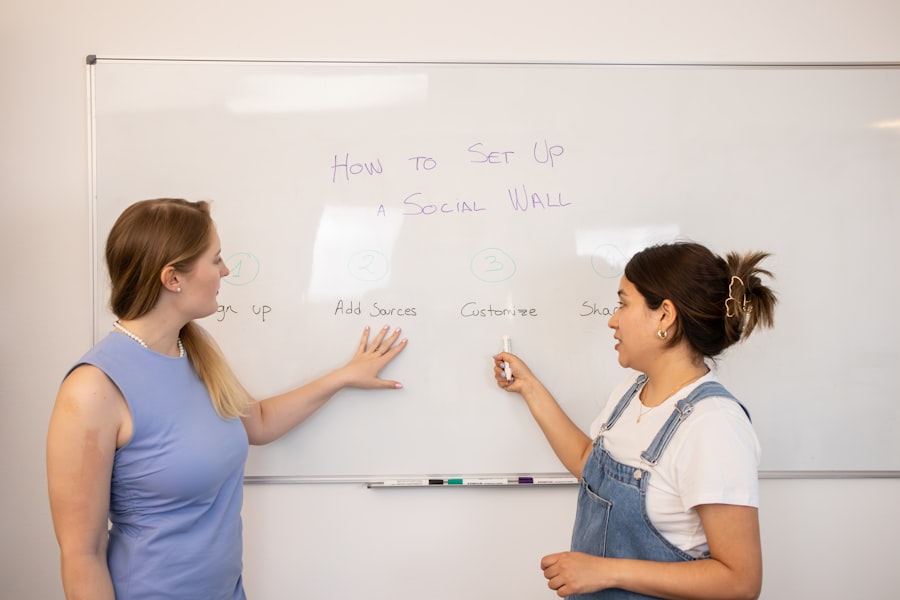
The integration of technology into the classroom has transformed traditional teaching methods, offering innovative tools that enhance the learning experience. Digital resources such as interactive whiteboards, educational software, and online platforms provide opportunities for personalized learning and immediate feedback. For example, platforms like Google Classroom allow teachers to distribute assignments, share resources, and facilitate discussions in real-time, making it easier for students to collaborate and engage with their peers.
Furthermore, technology can bridge gaps in accessibility and inclusivity. Students with disabilities may benefit from assistive technologies that cater to their specific needs, such as speech-to-text software or audiobooks. Additionally, online resources can provide differentiated instruction tailored to individual learning paces.
For instance, adaptive learning programs adjust the difficulty of tasks based on student performance, ensuring that each learner is appropriately challenged. By leveraging technology effectively, educators can create dynamic learning environments that not only enhance engagement but also prepare students for a technology-driven world.
Encouraging Critical Thinking and Problem-Solving
| Metric | Description | Measurement Method | Typical Range | Target Goal |
|---|---|---|---|---|
| Critical Thinking Assessment Score | Average score on standardized critical thinking tests | Standardized tests (e.g., Watson-Glaser) | 50-80% | 75% and above |
| Problem-Solving Task Completion Rate | Percentage of problem-solving tasks successfully completed | Task performance tracking | 60-85% | 85% and above |
| Time to Solution | Average time taken to solve complex problems | Time tracking during problem-solving exercises | 30-90 minutes | Less than 45 minutes |
| Number of Alternative Solutions Proposed | Average number of different solutions suggested per problem | Qualitative analysis of problem-solving sessions | 1-3 solutions | 3 or more solutions |
| Peer Review Feedback Score | Average rating from peers on critical thinking and problem-solving skills | Peer evaluation surveys | 3.0-4.0 (out of 5) | 4.5 and above |
| Self-Reflection Frequency | Number of self-reflection exercises completed per month | Self-reporting and logs | 1-3 times | 4 or more times |
Critical thinking and problem-solving skills are essential competencies that students must develop to navigate complex challenges in both academic and real-world contexts. Educators play a pivotal role in fostering these skills by designing activities that require students to analyze information, evaluate evidence, and draw conclusions based on logical reasoning. For instance, case studies or real-life scenarios can be employed in subjects like social studies or business to encourage students to assess various perspectives and devise solutions to multifaceted problems.
Moreover, promoting inquiry-based learning can significantly enhance critical thinking abilities. By posing open-ended questions and encouraging students to explore topics of interest through research and discussion, teachers can stimulate curiosity and independent thought. For example, in a history class, instead of simply memorizing dates and events, students might investigate the causes and consequences of a particular historical event, leading to deeper insights and a more nuanced understanding of the subject matter.
This approach not only cultivates critical thinking but also empowers students to become active participants in their education.
Providing Constructive Feedback and Support
Constructive feedback is a vital component of the learning process that helps students understand their strengths and areas for improvement. Effective feedback should be specific, actionable, and timely, allowing students to reflect on their work and make necessary adjustments. For instance, rather than simply marking an essay as “good” or “needs improvement,” educators can highlight particular sections that demonstrate strong arguments while also pointing out areas where clarity or evidence could be enhanced.
This targeted feedback encourages students to engage with their work critically and fosters a growth mindset. In addition to feedback on assignments, ongoing support is crucial for student development. Educators can create opportunities for one-on-one check-ins or small group discussions where students feel comfortable seeking clarification or guidance on challenging topics.
This personalized attention not only builds rapport between teachers and students but also reinforces the idea that learning is a collaborative process. By providing consistent support and constructive feedback, educators can help students navigate obstacles and celebrate their progress along the way.
Fostering a Positive and Inclusive Learning Environment
Creating a positive and inclusive learning environment is fundamental to student success. An atmosphere where all students feel valued and respected encourages participation and collaboration among peers. Educators can foster this environment by establishing clear expectations for behavior and promoting a culture of kindness and empathy within the classroom.
Activities such as team-building exercises or community service projects can help build relationships among students while reinforcing the importance of cooperation and mutual respect. Additionally, inclusivity extends beyond social dynamics; it also involves recognizing and celebrating diversity within the classroom. Incorporating diverse perspectives into the curriculum—whether through literature from various cultures or discussions about historical events from multiple viewpoints—can enrich the educational experience for all students.
By acknowledging different backgrounds and experiences, educators can create a sense of belonging that empowers every student to contribute their unique voice to classroom discussions.
Promoting Student Engagement and Participation
Student engagement is a critical factor in effective learning; when students are actively involved in their education, they are more likely to retain information and develop a passion for learning. To promote engagement, educators can employ various strategies that encourage participation both inside and outside the classroom. For example, incorporating gamification elements into lessons—such as quizzes with rewards or competitive group challenges—can motivate students to take an active role in their learning.
Moreover, providing opportunities for student choice can significantly enhance engagement levels. Allowing students to select topics for projects or choose how they demonstrate their understanding fosters autonomy and investment in their work. In a literature class, for instance, giving students the option to analyze different texts or create multimedia presentations based on their interpretations can lead to deeper engagement with the material.
By prioritizing student engagement through interactive methods and choice-driven activities, educators can cultivate a dynamic learning environment where curiosity thrives.
Creating Real-World Connections and Applications
Connecting classroom learning to real-world applications is essential for helping students understand the relevance of their education beyond academic settings. When students see how concepts apply to everyday life or future careers, they are more likely to appreciate the value of what they are learning. Educators can facilitate these connections by incorporating project-based learning opportunities that address real-world issues or challenges within the community.
For example, a mathematics class could engage in a project where students analyze local economic data to propose solutions for community development initiatives. Similarly, science classes might collaborate with local environmental organizations to study ecosystems or conduct experiments related to sustainability efforts. These hands-on projects not only reinforce academic concepts but also empower students to become active contributors to their communities.
By emphasizing real-world connections in education, teachers can inspire students to see themselves as agents of change equipped with the knowledge and skills necessary to make a positive impact on society.