

The learning process is a complex interplay of cognitive, emotional, and environmental factors that shape how individuals acquire knowledge and skills. At its core, learning involves the transformation of information into understanding, which is influenced by prior experiences, motivation, and the context in which learning occurs. Cognitive theories of learning, such as those proposed by Jean Piaget and Lev Vygotsky, emphasize the importance of developmental stages and social interactions in shaping a learner’s ability to process information.
Piaget’s theory suggests that children move through distinct stages of cognitive development, each characterized by different ways of thinking and understanding the world. Vygotsky, on the other hand, introduced the concept of the Zone of Proximal Development (ZPD), highlighting the significance of social interaction and guidance in facilitating learning. Emotional factors also play a crucial role in the learning process.

Motivation, for instance, can significantly influence a learner’s engagement and persistence. Intrinsic motivation, driven by personal interest and enjoyment in the subject matter, often leads to deeper learning compared to extrinsic motivation, which relies on external rewards or pressures. Additionally, the emotional climate of a learning environment can impact cognitive processes; a supportive atmosphere fosters confidence and risk-taking, while a negative environment can lead to anxiety and disengagement.
Understanding these dynamics is essential for educators and learners alike, as they navigate the multifaceted landscape of education.
Key Takeaways
- Learning is a complex process influenced by cognitive development and environmental factors.
- Schools play a crucial role in shaping cognitive abilities and academic growth.
- Supportive and well-structured learning environments enhance student engagement and success.
- Effective teaching methods and encouragement of critical thinking boost problem-solving skills.
- Addressing individual needs and fostering lifelong learning positively impact future opportunities.

The Role of Schooling in Cognitive Development
Schooling serves as a structured environment where cognitive development is nurtured through formal education. It provides a framework for learners to engage with diverse subjects, fostering critical thinking and analytical skills. The curriculum is designed not only to impart knowledge but also to encourage students to explore concepts deeply and make connections across disciplines.
For instance, subjects like mathematics and science require logical reasoning and problem-solving abilities, while literature and history promote critical analysis and empathy through the exploration of human experiences. Moreover, schooling introduces students to various pedagogical approaches that cater to different learning styles. Traditional methods, such as direct instruction, are complemented by collaborative learning experiences that encourage peer interaction and discussion.
This blend of instructional strategies helps students develop a more comprehensive understanding of content while honing their social skills. The role of teachers is pivotal in this context; they act as facilitators who guide students through their educational journey, adapting their teaching methods to meet the diverse needs of their classrooms.
Creating a Supportive Learning Environment
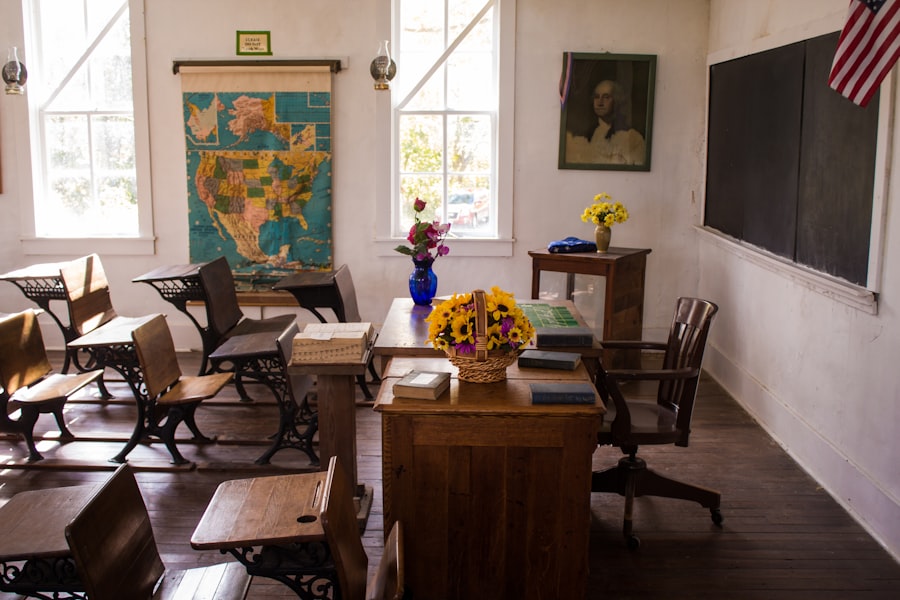
A supportive learning environment is fundamental to fostering student success and engagement. Such an environment is characterized by safety, respect, and encouragement, allowing learners to express themselves freely without fear of judgment. When students feel valued and understood, they are more likely to take risks in their learning, ask questions, and seek help when needed.
This sense of belonging can be cultivated through positive teacher-student relationships, where educators actively listen to their students’ concerns and interests. Physical aspects of the learning environment also contribute significantly to student engagement. Classrooms that are well-organized, equipped with resources, and designed for collaboration can enhance the learning experience.
For example, flexible seating arrangements allow for group work and discussions, while access to technology can facilitate research and creative projects. Additionally, incorporating elements such as art or nature into the classroom can stimulate creativity and reduce stress, further promoting a positive atmosphere conducive to learning.
Utilizing Effective Teaching Methods
| Teaching Method | Student Engagement (%) | Knowledge Retention (%) | Average Test Scores | Implementation Difficulty (1-5) |
|---|---|---|---|---|
| Lecture-Based | 45 | 50 | 70 | 2 |
| Collaborative Learning | 75 | 80 | 85 | 3 |
| Flipped Classroom | 80 | 85 | 88 | 4 |
| Project-Based Learning | 85 | 90 | 90 | 4 |
| Gamification | 90 | 75 | 82 | 3 |
| Direct Instruction | 50 | 60 | 75 | 2 |
Effective teaching methods are essential for maximizing student learning outcomes. One widely recognized approach is differentiated instruction, which tailors teaching strategies to accommodate the diverse needs of learners. This method acknowledges that students have varying backgrounds, abilities, and interests, requiring educators to adapt their lessons accordingly.
For instance, a teacher might provide advanced reading materials for gifted students while offering additional support for those who struggle with comprehension. Another effective teaching method is project-based learning (PBL), which engages students in real-world challenges that require critical thinking and collaboration. In PBL scenarios, students work on projects over an extended period, allowing them to delve deeply into a subject while developing essential skills such as time management and teamwork.
For example, a science class might undertake a project to design a sustainable garden, integrating concepts from biology, environmental science, and mathematics. This hands-on approach not only enhances understanding but also fosters a sense of ownership over the learning process.
Encouraging Critical Thinking and Problem-Solving Skills
Critical thinking and problem-solving skills are vital competencies that students must develop to navigate an increasingly complex world. Educators play a crucial role in fostering these skills by creating opportunities for inquiry-based learning. This approach encourages students to ask questions, investigate issues, and draw conclusions based on evidence rather than rote memorization.
For instance, in a history class discussing social movements, students might analyze primary sources to evaluate different perspectives on a particular event. Moreover, incorporating real-world problems into the curriculum can enhance students’ ability to think critically and solve problems effectively. By presenting challenges that require innovative solutions—such as addressing environmental issues or designing community service projects—educators can inspire students to apply their knowledge in meaningful ways.
This not only reinforces academic content but also cultivates a mindset geared toward exploration and creativity.
Fostering a Love for Lifelong Learning

Instilling a love for lifelong learning is one of the most significant gifts educators can provide their students. A passion for learning transcends formal education; it encourages individuals to seek knowledge throughout their lives. To foster this love, educators must create engaging and relevant learning experiences that resonate with students’ interests and aspirations.
For example, integrating technology into lessons can capture students’ attention while demonstrating the relevance of academic content in today’s digital age. Additionally, promoting curiosity is essential in nurturing a lifelong love for learning. Educators can encourage students to pursue their interests outside the classroom by providing resources for independent research or facilitating clubs centered around specific topics.
When students are empowered to explore subjects they are passionate about—whether it be coding, art, or environmental science—they are more likely to develop intrinsic motivation that fuels their desire for continuous growth.
Addressing Individual Learning Needs
Recognizing and addressing individual learning needs is paramount in creating an inclusive educational environment. Every student comes with unique strengths, challenges, and preferences that influence how they learn best. Educators must be equipped with strategies to identify these needs early on through assessments and observations.
For instance, some students may excel in visual learning while others may benefit from auditory or kinesthetic approaches. Implementing individualized education plans (IEPs) or personalized learning pathways can significantly enhance student outcomes. These plans outline specific goals tailored to each student’s abilities and provide targeted support to help them achieve those goals.
For example, a student with dyslexia may require additional time for reading assignments or access to audiobooks to facilitate comprehension. By addressing these individual needs proactively, educators can ensure that all students have equitable opportunities to succeed academically.
The Impact of Schooling on Future Opportunities
The impact of schooling extends far beyond the classroom; it shapes future opportunities for individuals in various aspects of life. A solid educational foundation equips students with essential skills that are highly valued in the workforce. Employers often seek candidates who possess critical thinking abilities, effective communication skills, and adaptability—qualities that are cultivated through quality schooling experiences.
Furthermore, education plays a crucial role in social mobility. Access to quality schooling can significantly influence an individual’s socioeconomic status over time. Research has shown that individuals with higher levels of education tend to have better job prospects and earning potential compared to those with less formal education.
For instance, a college degree often opens doors to professions that require specialized knowledge or training, leading to greater financial stability and career advancement opportunities. In conclusion, understanding the multifaceted nature of the learning process is essential for educators aiming to create effective educational experiences. By recognizing the role of schooling in cognitive development, fostering supportive environments, utilizing effective teaching methods, encouraging critical thinking skills, nurturing a love for lifelong learning, addressing individual needs, and acknowledging the long-term impact of education on future opportunities, educators can significantly enhance student outcomes and prepare them for success in an ever-evolving world.
