
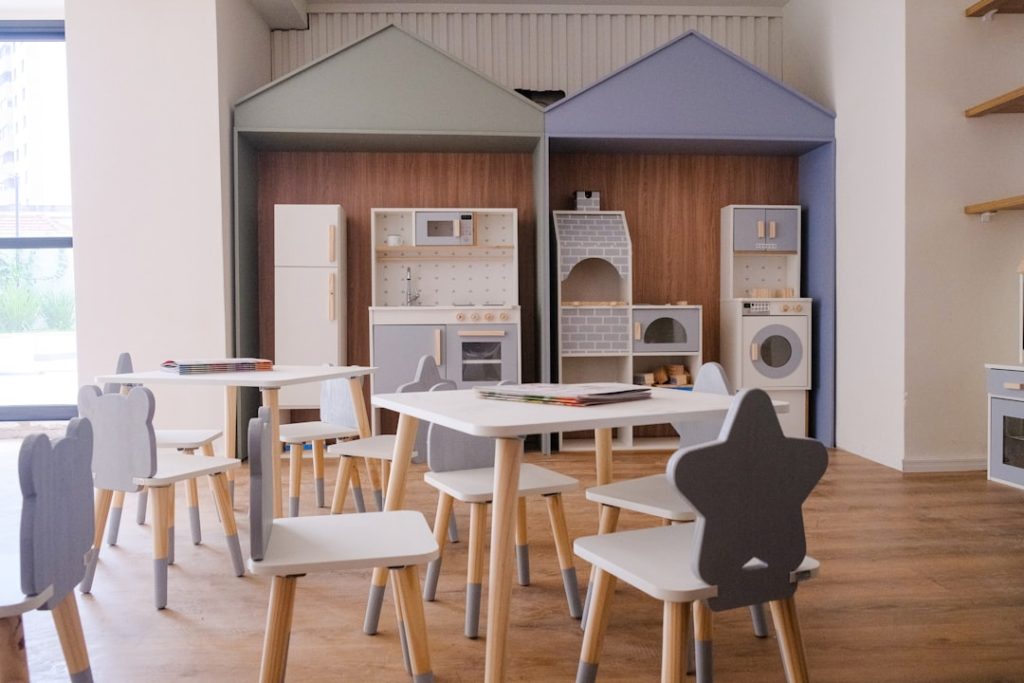
The Montessori philosophy, developed by Dr. Maria Montessori in the early 20th century, is rooted in the belief that children are naturally curious and capable of self-directed learning. This educational approach emphasizes respect for a child’s natural development and encourages an environment where they can explore and learn at their own pace.
Central to this philosophy is the idea that education should be child-centered, allowing children to take charge of their own learning experiences. Montessori believed that when children are given the freedom to choose their activities, they become more engaged and motivated, leading to a deeper understanding of the material. At the heart of the Montessori philosophy is the concept of the prepared environment, which is meticulously designed to facilitate exploration and discovery.

This environment is filled with materials that are developmentally appropriate and encourage hands-on learning. Montessori classrooms are often characterized by mixed-age groups, allowing younger children to learn from older peers while older children reinforce their knowledge by teaching others. This collaborative atmosphere fosters a sense of community and belonging, which is essential for a child’s emotional and social development.
The Montessori approach recognizes that education is not merely about academic achievement; it encompasses the holistic development of the child, nurturing their social, emotional, and cognitive skills.
Key Takeaways
- Montessori education emphasizes a child-centered philosophy that fosters natural development.
- A carefully prepared environment is crucial for encouraging exploration and unlocking potential.
- Self-directed learning empowers children to take ownership of their education and build confidence.
- Montessori methods nurture critical thinking, creativity, and imagination through hands-on activities.
- Trained Montessori teachers guide rather than direct, supporting long-term personal and academic growth.

The Role of the Montessori Environment in Unlocking Potential
The prepared environment in a Montessori classroom plays a crucial role in unlocking a child’s potential. Unlike traditional classrooms that often feature rows of desks and a one-size-fits-all approach to learning, Montessori environments are designed to be inviting and accessible. Each area of the classroom is thoughtfully arranged to promote exploration, with materials that cater to various learning styles and interests.
For instance, a practical life area may include activities such as pouring, sweeping, or buttoning, which not only teach essential life skills but also enhance fine motor development. This intentional design encourages children to engage with their surroundings actively. Moreover, the freedom to move within the classroom allows children to follow their interests and instincts.
They can choose activities that resonate with them, fostering intrinsic motivation and a love for learning. This autonomy is vital for developing critical thinking skills, as children learn to make choices, solve problems, and reflect on their experiences. The Montessori environment also emphasizes order and beauty, which helps children develop a sense of responsibility and respect for their surroundings.
By creating a space that is aesthetically pleasing and organized, educators instill in children an appreciation for their environment, further enhancing their ability to learn and grow.
The Importance of Self-Directed Learning in the Montessori Approach
Self-directed learning is a cornerstone of the Montessori approach, empowering children to take ownership of their educational journey. In a traditional educational setting, students often follow a prescribed curriculum dictated by teachers or standardized tests. In contrast, Montessori education encourages children to pursue their interests and passions, allowing them to engage deeply with subjects that captivate them.
This autonomy fosters a sense of agency and responsibility, as children learn to set goals, make decisions, and evaluate their progress. The emphasis on self-directed learning also cultivates critical life skills such as time management and self-discipline. Children learn to prioritize tasks and manage their time effectively as they navigate their learning paths.
For example, a child interested in biology might choose to spend an extended period studying plant life, conducting experiments, or creating presentations about their findings. This process not only deepens their understanding of the subject matter but also teaches them how to pursue knowledge independently. As they encounter challenges along the way, they develop resilience and problem-solving skills that will serve them well beyond the classroom.
Nurturing Independence and Confidence through Montessori Education
| Metric | Description | Typical Montessori Outcome | Comparison to Traditional Education |
|---|---|---|---|
| Self-Directed Learning Time | Percentage of class time children spend choosing and completing activities independently | 60-70% | Typically 20-30% |
| Confidence Level (Teacher Assessment) | Teacher-rated confidence in social and academic tasks (scale 1-10) | 8.5 | 6.5 |
| Problem-Solving Skills | Percentage of children demonstrating independent problem-solving in classroom tasks | 75% | 50% |
| Peer Collaboration | Frequency of cooperative activities initiated by children per week | 4-5 times | 2-3 times |
| Emotional Regulation | Percentage of children able to self-regulate emotions during challenging tasks | 80% | 55% |
| Parent Satisfaction Rate | Percentage of parents reporting increased child independence and confidence | 90% | 65% |
Independence is a fundamental goal of Montessori education, as it lays the groundwork for confidence and self-esteem. In a Montessori classroom, children are encouraged to take initiative and make choices about their learning experiences. This empowerment fosters a sense of competence as they successfully complete tasks and engage with materials independently.
For instance, when a child learns to tie their shoes or prepare a snack without assistance, they gain not only practical skills but also a profound sense of accomplishment. The nurturing of independence extends beyond academic tasks; it encompasses social interactions as well. Children are encouraged to collaborate with peers, resolve conflicts amicably, and take responsibility for their actions within the classroom community.
This social independence builds confidence in their ability to navigate relationships and contribute positively to group dynamics. As they experience success in both academic and social realms, children develop a strong sense of self-worth that propels them forward in their educational journey.
The Montessori Approach to Developing Critical Thinking Skills
Critical thinking is an essential skill in today’s rapidly changing world, and the Montessori approach provides an ideal framework for its development. By encouraging exploration and inquiry-based learning, Montessori education fosters an environment where children can ask questions, investigate solutions, and draw conclusions based on their observations. For example, when presented with a scientific concept such as gravity, children might engage in hands-on experiments using various materials to observe how objects fall or roll.
This experiential learning process encourages them to think critically about cause-and-effect relationships. Additionally, the mixed-age classroom structure promotes peer-to-peer learning, where older students can mentor younger ones. This dynamic not only reinforces the older child’s understanding but also encourages younger students to ask questions and think critically about the material being presented.
The collaborative nature of this learning environment cultivates an atmosphere where diverse perspectives are valued, further enhancing critical thinking skills as children learn to consider multiple viewpoints before arriving at conclusions.
Fostering Creativity and Imagination in Montessori Education

Creativity is an integral component of the Montessori approach, as it recognizes that imagination plays a vital role in a child’s development. The Montessori environment is designed to inspire creativity through open-ended materials that allow for exploration and experimentation. For instance, art supplies are readily available for children to express themselves freely without rigid guidelines or expectations.
This freedom encourages them to think outside the box and develop innovative ideas. Moreover, the emphasis on hands-on learning allows children to engage with materials in unique ways. Whether building structures with blocks or conducting science experiments with natural materials, children are encouraged to use their imagination to create and discover new possibilities.
This creative exploration not only enhances cognitive development but also nurtures emotional expression and problem-solving skills. As children engage in imaginative play and creative projects, they learn to embrace uncertainty and view challenges as opportunities for growth.
The Role of Montessori Teachers in Unlocking Potential
In the Montessori approach, teachers serve as guides rather than traditional instructors. Their role is to observe each child’s interests and developmental needs while providing support and resources that facilitate independent learning. This observational practice allows teachers to tailor their guidance based on individual strengths and challenges, ensuring that each child receives personalized attention.
For example, if a teacher notices a child struggling with a particular concept in mathematics, they might introduce additional materials or activities that align with that child’s learning style. Montessori teachers also foster a sense of community within the classroom by modeling respect, empathy, and collaboration. They create an environment where children feel safe to express themselves and take risks in their learning journey.
By encouraging open communication and mutual respect among students, teachers help cultivate social skills that are essential for success both inside and outside the classroom. This supportive atmosphere empowers children to unlock their potential by providing them with the tools they need to thrive academically and socially.
The Long-Term Benefits of the Montessori Approach for Unlocking Potential
The long-term benefits of the Montessori approach extend far beyond academic achievement; they encompass personal growth and lifelong learning skills that serve individuals throughout their lives. Research has shown that students who experience Montessori education often exhibit higher levels of motivation, creativity, and critical thinking skills compared to their peers in traditional educational settings. These attributes are invaluable in today’s complex world where adaptability and innovation are key drivers of success.
Furthermore, Montessori graduates tend to demonstrate strong interpersonal skills and emotional intelligence due to the emphasis on collaboration and community within the classroom environment. They are often more equipped to navigate challenges with resilience and confidence as they have been nurtured in an environment that values independence and self-directed learning from an early age. As they transition into adulthood, these individuals carry forward the principles instilled during their formative years—principles that empower them not only to pursue their passions but also to contribute positively to society as engaged citizens who value lifelong learning.